
If you're tapering off Ozempic, Wegovy, Mounjaro, or Zepbound—or just thinking about it—your appetite will likely return within weeks, not months, as your body's hunger signals settle back toward where they were before the medication. That doesn't mean anything went wrong, and it doesn't erase the progress you made. It means the window right before and after you stop is the most important time to build appetite habits that don't depend on a weekly injection.
Why Your Appetite Comes Roaring Back When You Stop a GLP-1

GLP-1 medications don't just reduce appetite in a simple way—they work by mimicking natural hormones that regulate hunger and slow digestion, essentially recalibrating the conversation between your gut, hormones, and brain.
Once the medication clears, that hormonal signaling starts to fade, and increased hunger, stronger cravings, and the return of so-called "food noise" can show up before the drug has even fully left your system. One obesity medicine physician summed up the honest reality bluntly: "We don't have a good off-ramp right now." That's not meant to alarm you—it's meant to explain why a plan matters more than willpower here.
The Off-Ramp Trend: Tapering, Spacing, and Microdosing
A real cultural conversation has opened up around how to leave GLP-1 therapy without a hard stop. Some providers are experimenting with spacing doses further apart—moving from weekly to every other week—or keeping patients on a lower maintenance dose rather than stopping outright.
The evidence behind these approaches, sometimes called microdosing or off-ramping, is still limited, which is exactly why any change to dosing should happen with your prescriber, not on your own timeline. What researchers do agree on is that there's no single predictable schedule for when appetite returns after stopping—it varies significantly from person to person, which is one more reason to prepare early rather than react late.
Build the Habits Before the Medication Effect Fades

Dietitians who work with GLP-1 patients consistently point to the same foundation: protein, fiber, and movement, put in place while eating well still feels easy, so they're already automatic once appetite signals shift.
Clinicians add another layer worth remembering: focus on food quality as much as quantity as hunger returns, and protect lean muscle with regular activity, since muscle is your body's primary calorie-burning engine.
- Anchor each meal with a protein source and a fiber-rich vegetable or legume
- Keep a simple, repeatable breakfast so mornings aren't a decision point
- Move your body most days—strength work especially—to protect metabolism
- Track how you feel, not just the scale, during the first few weeks off
How Korean Herbal Wisdom Approaches Appetite and Balance
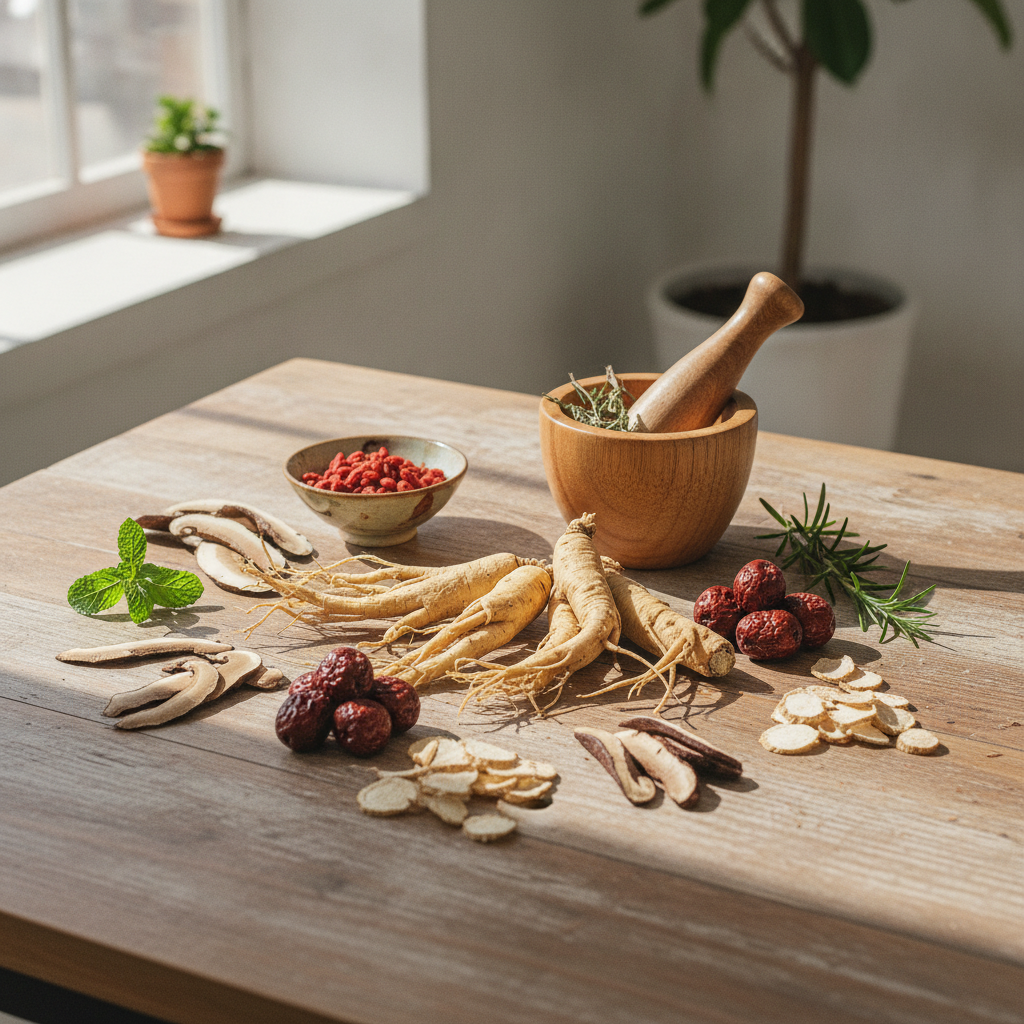
Long before GLP-1 drugs existed, Korean herbal medicine—hanbang—was built around a different question: how do you help the body find its own equilibrium, rather than override it? That philosophy is having a real moment again, with modernized hanbang formulas built on ginseng and other traditional botanicals seeing a major resurgence as they're re-examined through contemporary research.
At VYNEHERB, that's the lens we start from: 500 years of Korean herbal tradition, refined with modern nutrition science, meant to support the body's own appetite and fullness cues rather than force them.
Where Gentle Herbal Support Fits In
To be clear, no herbal supplement works the way a GLP-1 medication does, and nothing here should be read as a substitute for your prescriber's guidance on starting, adjusting, or stopping treatment. That's a different lane entirely, and it should stay that way.
What herbal support can do is sit alongside the habits you're building. Many people navigating the transition off medication turn to a plant-based herbal appetite suppressant as a gentle daily habit—something that supports normal feelings of fullness between meals while you re-establish routines that don't rely on the drug. Think of it as scaffolding for the habit, not a replacement for the medication.
How Long Does the Transition Period Usually Last?

There's no fixed number of weeks, and that's the honest answer. Rebound effects on appetite and weight are typically measured in weeks to months rather than days, and individual response varies widely based on how long you were on the medication, your dose, and the habits already in place before you stopped.
What's more consistent is the data on outcomes: in clinical trial follow-up, people who stopped semaglutide regained a significant portion of their prior weight loss within a year, while those who stayed on treatment or built strong maintenance habits fared better. That's not a reason to panic—it's a reason to treat the transition period as seriously as the ramp-up was.
Frequently Asked Questions
Will my appetite go back to exactly how it was before medication?
For most people, appetite-regulating hormones move back toward pre-treatment levels, so some increase in hunger and cravings is expected. How much it shifts and how fast varies by person, which is why building habits ahead of time matters.
Can herbal supplements replace a GLP-1 medication?
No. Herbal appetite support works differently and more gently than prescription GLP-1 drugs, and it isn't intended to treat, cure, or replace any medical treatment. It's best understood as everyday support for appetite habits, used alongside guidance from your healthcare provider.
Should I taper off a GLP-1 medication on my own?
No—any change in dose, spacing, or discontinuation should be discussed with the prescriber managing your care, since individual response and timelines vary. They can help you weigh options like tapering or maintenance dosing safely.