
If a snack craving hits like clockwork every afternoon around 3 p.m., the simplest fix might already be sitting in your cupboard: a warm herbal tea. Warm herbal tea calms afternoon snack cravings because heat itself is a real physiological fullness cue, not just a comforting story, and the small ritual of brewing and sipping interrupts the automatic habit loop that drives most afternoon snacking. Give it a few sips and your gut, your brain, and your routine all start pulling in the same direction — toward calm, instead of toward the vending machine.
Why Does a Warm Cup Quiet the 3 P.M. Craving?
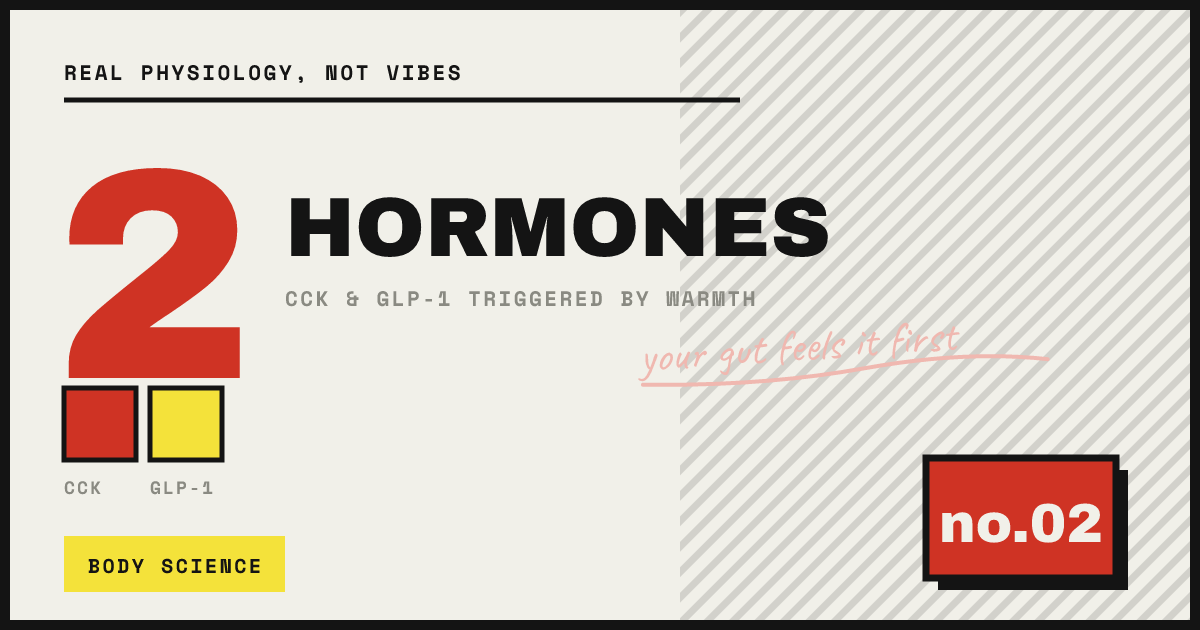
A warm mug is doing real biological work, not just cozy vibes. Heat acts as a sensory primer for the gut, and thermoreceptors in the mouth and esophagus send signals ahead of anything you actually swallow. Warm liquids also slow gastric emptying compared to cold ones, stretching out the stomach's stretch-receptor signals that tell your brain you're still full. That early warmth cue helps trigger two of the body's own satiety hormones, CCK and the naturally occurring GLP-1 — the same hormone your body already makes, distinct from any prescription version. This is part of why a cold sparkling water rarely takes the edge off a 4 p.m. urge the way a warm cup does — cold, sweet drinks simply don't send the same upstream fullness signal. None of this requires an exotic blend. It just requires heat, a few quiet minutes, and a mug in your hands.
The Habit Loop Behind Afternoon Snacking
Most 3 p.m. cravings aren't really about hunger. Herbal tea can be calming and comforting enough to give a craving something to pass through, especially when the urge is closer to habit or boredom than true hunger. Afternoon energy dips often coincide with rising cortisol, and some herbal traditions specifically time a calming cup in the afternoon to help clear the day's cortisol buildup before it tips into stress snacking. Researchers who study this behavior point to something simpler than biochemistry. One of the clearest real-world patterns isn't chemical at all — it's behavioral: trading a several-hundred-calorie afternoon latte for a zero-calorie warm tea quietly creates a deficit over time, independent of anything special in the leaves. The mug becomes the pause button between the urge and the vending machine.
What Hanbang Wisdom Adds to Your Afternoon Cup
Long before "de-bloat tea" was a trend, Korean households were already reaching for warm herbal brews between meals. Hanbang, or traditional Korean medicine, developed over generations alongside neighboring East Asian systems, and Korean practitioners adapted those shared principles into their own blends using native roots, barks, and berries. The habit has a modern chapter too. As takeout coffee culture took over Korean streets, some people grew tired of leaning on caffeine and started reaching for warm hanbang tea instead — something gentler on the body that still fit a busy afternoon. That's the lineage VYNEHERB borrows from: centuries of herbal pairing wisdom, filtered through a modern, practitioner-reviewed lens rather than sold as a miracle cure.
Does This Replace What GLP-1 Medications Do?
No — and it isn't trying to. Warm herbal tea works on your habits and your own hormone signaling; it is not a substitute for prescription GLP-1 medications like semaglutide or tirzepatide, and you should never start, stop, or adjust a medication based on a cup of tea. Certain foods and habits, especially those rich in fiber and protein, can gently nudge the body's own GLP-1 release, though the effect is far more modest than medication and works more as support than solution. Some people layer a gentle GLP-1-supporting habit on top of an already balanced routine, not as a replacement for medication or lifestyle basics, but as extra support for everyday appetite habits. If you're on a GLP-1 medication, or thinking about coming off one, that conversation belongs with your prescribing doctor — tea can sit alongside that plan, never in place of it.
How to Build an Afternoon Tea Ritual That Works
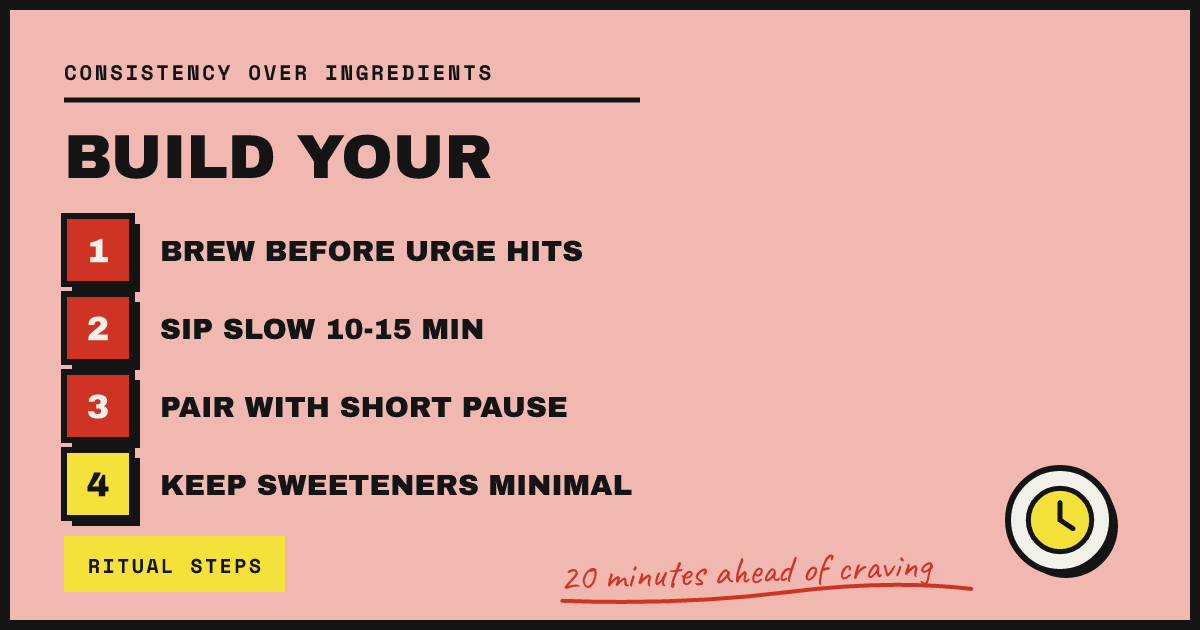
Consistency matters more than any single ingredient. Try brewing a cup 20–30 minutes before your usual craving window, so the ritual is already underway before the urge even arrives. Many people start simply — swapping one afternoon coffee for a warming herbal cup and noticing the shift over a week or two. If coffee-to-tea feels like the natural next step, a warm, practitioner-formulated option like Yeori Tea is built exactly for that afternoon swap — a caffeine-light, herbal de-bloat blend designed to slide into the same slot your coffee used to hold. Keep the cup nearby, keep it warm, and let the ritual carry some of the weight your willpower doesn't have to.
- Brew before the craving starts, not after
- Sip slowly over 10–15 minutes instead of gulping
- Pair it with a short pause — a walk, a stretch, a window view
- Keep sweeteners minimal so the ritual stays calorie-light
Frequently Asked Questions
Does warm herbal tea actually stop cravings, or just distract from them?
It does a bit of both. The warmth itself slows digestion and supports natural fullness signals, while the ritual of brewing and sipping interrupts the habit loop behind most afternoon snacking. The body's response on its own is modest, but the routine effect can still be meaningful over time.
How long before I notice a difference?
Many people notice the habit shift within a week or two of staying consistent, since it's largely about retraining the 3 p.m. reflex. The warmth effect itself is immediate each time you drink it, even if the bigger craving pattern takes a little longer to settle.
Can I drink herbal tea alongside a GLP-1 medication?
Herbal tea is generally a gentle, low-calorie habit that many people enjoy alongside a GLP-1 medication, but it is not a substitute for that treatment. Always check with your prescribing doctor before changing your routine, especially around hydration and appetite.